Fat Chance
Robert H. Lustig
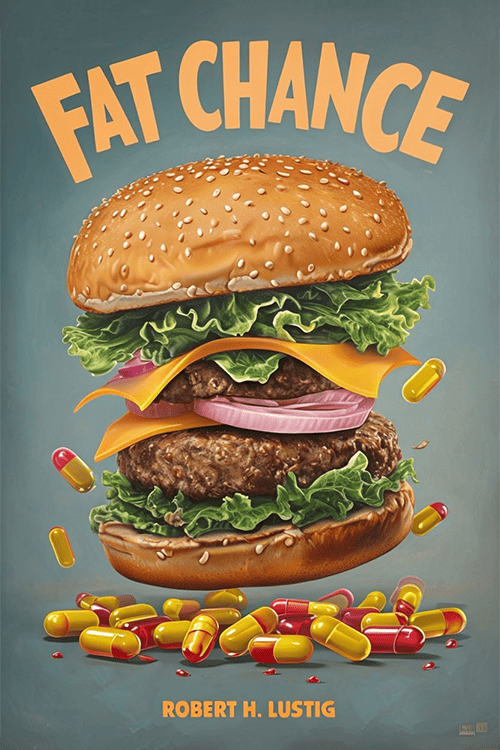


Fat Chance
/
Robert H. Lustig
About this Author
Robert H. Lustig is a pediatric endocrinologist who has dedicated his career to studying the effects of sugar on the central nervous system and metabolism. He is well-known for his research and advocacy against sugar and processed foods, which he links to various health issues including obesity and chronic diseases. Lustig is a Professor Emeritus of Pediatrics in the Division of Endocrinology at the University of California, San Francisco (UCSF). His work has significantly influenced discussions around public health policies related to diet and nutrition.
2013
Arts & Entertainment
11:02 Min
Conclusion
7 Key Points
Conclusion
Obesity and metabolic syndrome are driven by diet, processed foods, and industry influence, exacerbating health issues like diabetes and heart disease. Addressing these requires societal change, better food policies, and a focus on healthier, informed choices.
Abstract
Robert H. Lustig, a pediatric endocrinologist at UCSF, explores the harmful impact of sugar and processed foods on metabolism and overall health in his book “Fat Chance: Beating the Odds Against Sugar, Processed Food, Obesity, and Disease” (2013). Lustig argues that the global rise in obesity is not just a matter of personal responsibility, as the food industry and flawed government policies have promoted misleading ideas about nutrition. He stresses that sugar is addictive, disrupting the body's hormones and contributing to metabolic syndrome, which can affect anyone, regardless of weight. While personal strategies like eating fiber and exercising help, Lustig believes real change requires policy reforms and greater accountability from health care systems and government.
Key Points
Summary
Obesity May Signal Metabolic Syndrome, A Cluster Of Health Issues.
Obesity doesn't directly cause death but relates to body weight. It's often linked to metabolic syndrome, identified by five signs: a large waist, high triglycerides, low "good" cholesterol, high blood pressure, and high blood sugar. Having three of these can diagnose metabolic syndrome, which increases with age and leads to serious health issues like diabetes and heart disease.
About 20% of obese people are healthy internally, while some thin people are not, a mystery clarified by studying a genetic condition called lipodystrophy. People with this condition appear thin but suffer from serious health issues like diabetes and high blood pressure because their bodies can't store fat properly.
In contrast, most obese individuals experience similar issues due to excess dietary fat overwhelming their fat cells, leading to improper fat storage in places like the liver. However, healthier obese individuals have expansive fat tissue that stores extra fat more effectively, preventing it from accumulating in harmful areas.
Sugar Is Harmful To Health.
Sugar has had a profoundly negative impact on the American diet, contributing significantly to diseases like heart disease and diabetes. Journalist Gary Taubes argues that sugar is largely responsible for the increase in chronic diseases across Western cultures. Research increasingly links sugar to inflammatory diseases such as cancer and Alzheimer’s.
The prevalence of sugar in American foods can be traced back to flawed scientific studies that influenced U.S. nutritional policies for years. In 2016, it was revealed that the sugar industry had funded much of the research from the 1960s onward, which favored sugar and discredited fat without requiring researchers to disclose their funding sources. Sugar industry executives even served on government panels, presenting a serious conflict of interest.
This manipulation by the sugar industry was well-coordinated, especially after sugar rationing in World War II. Meanwhile, major companies like Coca-Cola also sponsored studies downplaying sugar's risks. Considering the high levels of added sugar in American foods today, eliminating it completely from our diets is nearly impossible. Gary Taubes compares sugar's health risks to smoking: while one person might smoke a pack a day without getting lung cancer, another might not be so lucky. Similarly, it’s hard to determine how much sugar is too much, as it likely varies from person to person.
A Fiber-Rich Diet Helps Prevent Weight Gain.
Eating fiber, found in plant-based foods like veggies, fruits, legumes, and whole grains, is key to fighting obesity. These high-fiber foods fill you up with fewer calories and have been linked to lowering the risk of early death. The real breakthrough came in 2017 when scientists figured out why fiber is so beneficial.
It turns out fiber doesn't work its magic directly on our bodies but rather feeds the good bacteria living in our gut. These bacteria, thriving on a layer of mucus in our intestines, play a crucial role in keeping our immune system strong. For a long time, experts knew that humans can't digest fiber by themselves; it’s the gut bacteria that break it down with their enzymes.
Research into which bacteria flourish on a fiber-rich diet could tell us which ones are best for our health. A diet low in fiber allows different bacteria to dominate, leading to gut problems like leaky gut syndrome. This condition can cause ongoing inflammation, which is harmful and can even make the body store more fat, linking it to obesity. On the flip side, the good bacteria that feed on fiber produce fatty acids that get into our bloodstream and help reduce inflammation.
Elevated Insulin Levels Chiefly Influence Metabolic Syndrome.
Insulin is crucial for controlling blood sugar levels in our bodies, influencing both energy and how much fat we store. However, more people nowadays are finding that their bodies aren't responding to insulin as well as they should. This issue leads to a condition called Type II diabetes, which affects millions in the US, and those numbers keep climbing. The irony is that even as insulin is becoming more essential for treatment, its cost is skyrocketing in the United States.
From 2002 to 2013, the price of insulin almost tripled, partly because only three companies made it in the US. These firms have managed to keep their patents by making minor changes to insulin that are barely checked or proven to be effective. This price hike hits low-income and uninsured people the hardest. Even with Medicare, the coverage is often not enough, leaving many unable to afford insulin. As a result, many are forced to choose between insulin and other crucial medicines, or even basic needs like housing and food.
Globally, Many Consume Excessive Amounts Of Processed Meals.
The global shift from eating fresh whole foods to consuming more processed foods has sparked a major obesity crisis. A striking example is Brazil, where obesity rates have soared, doubling in just ten years due to a surge in processed and sugary food consumption. Similarly, in Latin America, the demand for sugary sodas has skyrocketed since the early 2000s. From 2011 to 2016 alone, worldwide sales of processed foods jumped by 25%.
In some parts of Latin America, Africa, and Asia, where many people live far from supermarkets, large food companies use local residents to sell unhealthy snacks like pudding and cookies right at people's doorsteps. In places like Brazil, even though many of these consumers are technically overweight, they're not getting the nutrients they need, essentially making them malnourished. The influence of Western food companies reaches beyond just health issues.
In Brazil, as these corporations gain power, local agriculture is shifting away from growing healthy foods to more profitable crops like sugarcane. Moreover, companies such as Coca-Cola and McDonald’s are investing heavily in political campaigns, gaining significant influence over government policies. This allows them to shape laws and regulations in their favor, impacting local economies and diets.
Obesity's Main Drivers Are Food Surroundings And Brain Activity, Not Self-Control.
In his 2017 book "The Hacking of the American Mind," Robert Lustig argues that the American food industry is designed to maximize profit by targeting our brain's response to food, not by being malicious but simply to make money. He points out that foods high in fat, salt, and sugar are promoted in ways that make us feel good temporarily through dopamine, a brain chemical related to pleasure. This is different from serotonin, another brain chemical, which is about long-term well-being and satisfaction.
Lustig notes that pleasure is fleeting and can lead to addiction-like behaviors, while true happiness has no negative effects. He uses the example of McDonald's advertising. The slogan "I’m Lovin' It" linked eating their food with feelings of joy, a campaign that ran for 12 years until 2015. Even though this campaign has ended, McDonald's still targets children with Happy Meals. These marketing strategies make it tough for people to resist these foods because they mess with our ability to make healthy choices by continually triggering our pleasure centers, making us crave more.
Overweight Individuals Encounter Significant Bias In Western Culture.
In Western culture, there's a big contradiction: many people are overweight, yet society is obsessed with being thin. This creates a tough environment where people with extra weight often face a lot of shame, not just from mean individuals but also from well-meaning family members, doctors, and others. This stigma can hurt both their mental and physical health. For instance, children who are mocked may end up eating more unhealthy foods as a way to cope, worsening the issue. Doctors are advised to discuss weight in a sensitive way.
The American Academy of Pediatrics and the Obesity Society advised in 2017 that pediatricians should focus on healthy behaviors rather than just appearance. They recommended using terms like "body mass index" instead of "obese" to reduce emotional impact. Teachers and parents need to watch their words too. A study showed that over one-third of overweight children heard hurtful comments from their parents in countries like the USA, Canada, Australia, and Iceland.
Adults face similar challenges; workplace studies indicate that being overweight or having been overweight can lead to discrimination, especially for women. Another interesting fact is that overweight individuals can feel the negative impact of fat-shaming even if it's not directed at them. Watching videos of others struggling with diet and exercise can raise their stress hormone, cortisol, levels.
Regulations Must Shift To Tackle America's Weight Problem.
Obesity is a worldwide crisis that can't be fixed by individuals alone. Especially in the U.S., we need major laws to tackle this issue. In 2016, the U.S. revamped nutrition labels for the first time in 25 years. The updated labels are easier to read with big fonts for key details and updated serving sizes.
They now show added sugars separately so you can tell the difference between natural sugars in fruits and milk and refined sugars in sweets. These changes are set to be mandatory by 2020, but many companies are expected to change their products earlier to make their labels look better. In 2017, major companies like Nestlé, Campbell Soup Company, and Dean Foods left the Grocery Manufacturers Association, a big industry group that resists this kind of openness.
This is part of a bigger trend where more companies are aiming for clear information for customers. This shift is also seen in deals like PepsiCo buying Naked Juice, Coca-Cola acquiring Honest Tea, and Kellogg’s taking over Kashi, showing a move towards healthier options as consumer demand increases.
Share:
Latest Books
Related Books




Take a moment to rate and review our app. Your insights help us to improve.