Purple Cow
Seth Godin
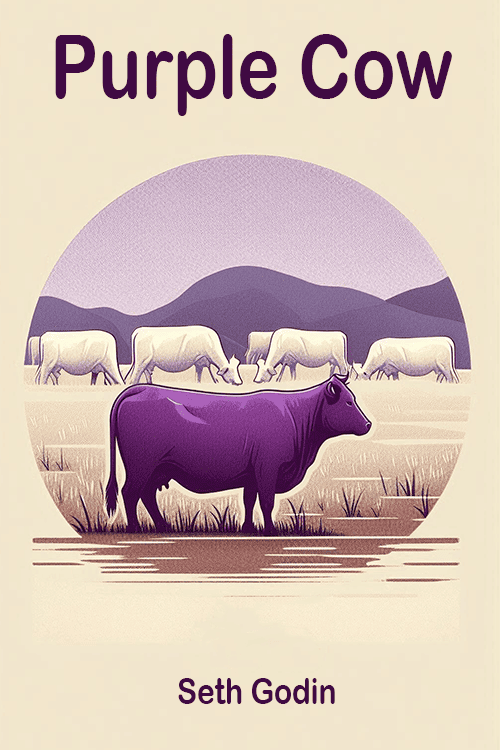


Purple Cow
/
Seth Godin
About this Author
Seth Godin is a renowned entrepreneur and marketing expert known for founding Yoyodyne and Squidoo. His influential books like "Permission Marketing" and "Linchpin" have made him a leading figure in the field.
2003
Business & Money
12:24 Min
Conclusion
7 Key Points
Conclusion
In today's crowded advertising landscape, standing out requires innovative marketing tailored to early adopters. Success hinges on creating remarkable products that spark word-of-mouth, rather than relying on traditional mass media, to effectively engage and convert target audiences.
Abstract
Modern marketing faces a paradox: inundated with ads, consumers overlook most, only noticing what's truly exceptional. To succeed, businesses must create standout products-like the memorable Volkswagen Beetle-that naturally attract attention and spark conversation. Seth Godin, a pioneer in marketing, emphasizes the shift from traditional advertising to creating remarkable, "Purple Cow" products. This approach not only defies convention but also demands courage to adopt criticism and innovate boldly. Today, effective marketing means crafting products that inherently stand out, driving organic interest and adoption.
Key Points
Summary
Advertising Is Losing Its Impact Due To Its Overabundance
Marketing is changing a lot these days. In the past, when you watched TV or read a newspaper, you'd see only a few ads. This made those products seem reliable. But now, there are ads everywhere, and it's hard for any of them to stand out. People are bombarded with so many advertisements that they can't pay attention to all of them. A good example is when an author, staying at a nice hotel, asked some people reading a newspaper if they could name two companies with full-page ads in that paper. No one could remember even two.
Consumers often ignore marketing unless it perfectly fits their needs. For example, you wouldn't pay attention to car ads unless you're in the market for a new car. This trend makes traditional advertising on mass media less effective. If your company runs a TV ad, many people will see it, but only a small number will actually be interested in your product. Even fewer will pay attention to the ad, and only a tiny fraction of those will decide to make a purchase.
Imagine you're launching a new pain relief medication brand. There are already many pain relief brands out there, so you need to tackle three challenges: First, you have to find people who want pain relief. Second, from this group, you need to identify those who are not satisfied with the current options. Finally, you must reach those who will actually pay attention and buy your product. These trends make it increasingly difficult to effectively reach your target customers and market your products.
To Shine Today, Your Product Or Service Must Be Extraordinary
Advertising is changing. Looking back, we can see three main periods: before advertising, during advertising, and after advertising. Let's explore each one.
The Power of Remarkable Marketing
To make your product or service immediately noticeable in the market, it needs to be like a Purple Cow: something unique and eye-catching. This kind of marketing is called remarkable marketing. Take the new Volkswagen Beetle as an example. The original Beetle was hugely popular for over fifteen years. Bringing it back was quite a challenge. It turned out to be a huge hit because its unique shape and attractive colors made it stand out among other cars on the street. Plus, rave reviews and word-of-mouth made it even more famous.
Accept risk is now safer than completely avoiding it
Sure, many companies hesitate to try new ideas that could make them stand out. This fear holds them back from creating exciting products that could succeed in today's competitive market. Take the Buick, for example. It's always been a plain car, with a design that plays it safe. As a result, it's never been a top seller. In a crowded marketplace, blending in means you might as well be invisible. To succeed, companies need to push past this fear of innovation and create products that truly capture attention.
Consider Andrew Weil's journey through Harvard Medical School. While most aimed to excel as traditional doctors, Weil took a different route. He challenged norms by merging standard medicine with alternative approaches often dismissed by the medical world. This bold move paid off, enabling him to aid countless people through his clinics, writings, and talks. Another popular but flawed business tactic is "follow the leader," where companies copy industry giants. Yet, this approach won't make you a trailblazer yourself.
Leaders achieve success by taking risks and creating something exceptional. Simply copying them won't make you stand out. Companies that follow this path often fail in the long term because markets inevitably change over time. They get stuck because they lack experience in adapting to new trends. Take the music industry, for example Record labels used to copy each other, making similar products with matching labels and packaging. When technology changed and online music stores emerged, these labels struggled because they weren't prepared to handle such changes.
Champion customers are eager to innovate and advocate
Once you've got a great product, how do you let everyone know about it? There are five types of people who might use your product:
Conventional marketing wisdom says to target the early and late majorities first because they're the biggest group. But surprisingly, they're hesitant to try new products until everyone else is using them. Instead, focus on reaching out to early users who are quick to adopt new things. They tend to find and promote new products, which can create a lot of excitement around them. To do this, make sure your product appeals to early adopters and helps them spread the word. Take digital cameras, for example, they're easier and cheaper to use than old-fashioned film cameras. So how would you promote them?
Targeting Early Adopters
Start by aiming your marketing at tech enthusiasts and pro photographers, who are the first to try new gadgets. They'll understand the benefits of your product and can convince others to try it too. This way, you'll attract customers from other groups. To figure out how to get more people talking about your product, ask yourself: "How easy is it for someone to recommend your product to others?" Also, think about whether your target group likes to share what products they enjoy.
Marketing Is Creating The Product, Not Just Selling It Later
Marketing isn't just about promoting products after they're made-that's just advertising. Real marketing is much more involved. It starts with creating the product. A successful product is designed from the beginning with marketing in mind, affecting its design, production, pricing, and sales to make it something people will talk about. For instance, the CEO of JetBlue asked the Head of Marketing to help with product design and employee training right from the start.
Marketing is all about finding what sets you apart from your competitors. To find this edge, you need to test different strategies and compare how your product differs from others in terms of pricing and promotion. Since the core of marketing is your product, you should create a simple slogan that clearly conveys its main message. For instance, think of the Leaning Tower of Pisa. It's a famous tourist spot because its main feature, being a leaning tower, is easy to understand and remember. This acts as its "slogan."
On the other hand, the Pantheon in Rome, despite its beauty and historical significance, doesn't have such a clear message and gets only one percent of the visitors that the Leaning Tower of Pisa does. Another great example of a slogan, without using words, is the iconic blue box from Tiffany & Co. jewelry. This box sends a clear message of elegance and high quality. Whenever someone gives a gift in this box, they are promoting the brand and its reputation.
Target Those Seeking Your Solution And Evaluate Its Impact
Most ads today don't work because the people who see them either aren't interested in the product or aren't early adopters who love trying new things and sharing them. So, what makes some ads successful? And how can you tell if yours are? The key is to target your ads well.
In the past, marketers could choose their audience, but now, with so many ads out there, it's the customers who decide whether to pay attention to your ad. To improve something, you need to measure it. But remember, measuring also has a cost. So, think about both how effective an action is and how much it will cost to measure its success.
Many Firms Fear Critique, Mockery, And Disruption Of Being Extraordinary
Many companies struggle to stand out because they fear criticism. When you're remarkable, you inevitably attract attention-and with attention comes judgment. Take the Cadillac CTS, for example. Despite some calling it ugly, it's sold well and its buyers love it. Being exceptional means inviting criticism, but criticism doesn't equate to failure. If you're not getting criticized, you're probably not taking enough risks. Another fear companies have is looking foolish or offending someone by being too bold. This fear can hold them back from being daring and memorable.
Certainly! Being different can lead to others making fun of you. But here's the twist: sometimes, that mockery can actually make your product famous. It spreads the word, even if it starts with a laugh. Aiming to be offensive or outrageous isn't a smart move. It might occasionally work, but more often than not, it creates scandals that spread negative reviews-definitely not what you're aiming for. One of the biggest worries for major companies, when they consider creating something truly unique (like a "Purple Cow"), is the massive changes it might require. Think overhauling factories and rethinking how things are done.
Once you figure out what makes you stand out, you have to commit to it, even if it means shaking up everything you've built. Brad Anderson, CEO of Best Buy, faced a major challenge: how to make his company stand out. He decided to flip the script, focusing on what customers actually wanted, rather than just pushing what Best Buy had to sell. This bold move completely transformed how the company operated. Best Buy had already invested heavily in its old ways, but Anderson wasn't afraid to shake things up. His strategy paid off big time, leading to significant changes throughout the company.
Share:
Latest Books
Related Books



_(2).png)


Take a moment to rate and review our app. Your insights help us to improve.