Disability Visibility
Alice Wong
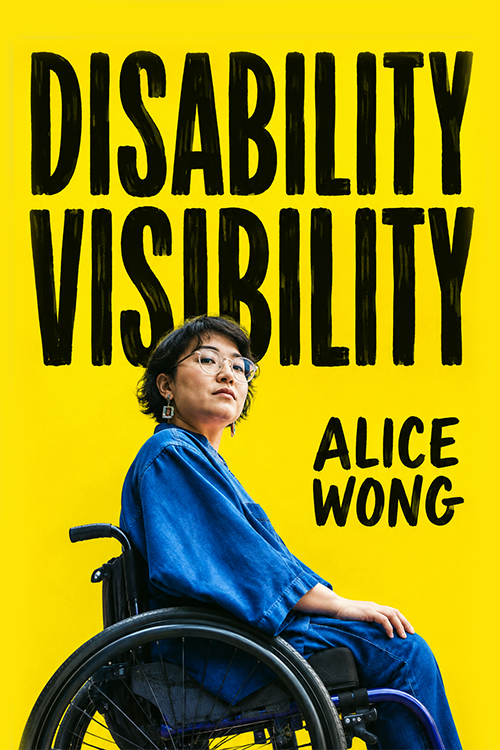


Disability Visibility
/
Alice Wong
About this Author
Alice Wong is an activist for the disabled community, a media creator, and a research consultant. She founded and directs the Disability Visibility Project and co-produces the Disability Visibility podcast. From 2013 to 2015, she was appointed by President Barack Obama to serve on the National Council on Disability.
2020
Biographies & Memoirs
0 Min
Conclusion
7 Key Points
Conclusion
Disabled people face many challenges and unfair treatment in society. Their stories need to be heard. Acceptance and inclusion bring strength and freedom. Communities must create safe spaces and support each other. Equal access and justice help everyone live better lives.
Abstract
In "Disability Visibility" by Alice Wong, disability is not a limitation to hide, cure, or pity, but a human experience deserving visibility, dignity, creativity, and equal opportunity. Through powerful stories of disabled activists, artists, scientists, and communities, the text challenges ableism in media, healthcare, fashion, justice, and everyday life. It shows how disabled people transform barriers into innovation, build supportive communities, and redefine what it means to live a meaningful life. Society must stop forcing disabled people to fit into narrow definitions of "normal" and instead create spaces where every body, identity, and ability can thrive, contribute, and be fully seen.
Key Points
Summary
Lack of Representation of Disabled People in Media
Alice Wong grew up rarely seeing people like her on TV or in magazines. When disabled characters appeared, they were mostly white men, shown as having sad or ruined lives. Even though the Americans with Disabilities Act (ADA) made it illegal to treat disabled people unfairly over 30 years ago, disabled people are still not well represented in media, politics, and books. A 2019 study found that only 11% of people working in publishing said they had a disability, so most stories are chosen by people without disabilities.
Alice Wong wanted to share more stories about disabled people, so she started the Disability Visibility Project. She worked with StoryCorps to collect 140 stories for the 25th anniversary of the ADA law. The project grew online, spreading awareness through social media. In 2016, they live-tweeted a debate, and by 2020, they hosted Twitter town halls with presidential candidates to talk about disability rights. Sharing these stories helps people understand the many different experiences of disabled individuals, fight stigma, and connect. The project uses podcasts, blogs, and books to make sure all kids see themselves in the world.
The Value of Disabled Lives
Harriet McBryde Johnson was a lawyer and disability rights activist who spent over 40 years showing others that her life mattered. She had a muscle-wasting disease since childhood, used a power wheelchair, and had a curved spine with a very thin body. Even though she felt fine with how she looked, many people treated her differently. Strangers would call her brave just for going outside or say they'd rather die than live like her. Despite this, Harriet stayed strong and proved that her life was full and meaningful, just like anyone else's.
People wrongly think that disabled people's lives are less valuable. They don't see the happiness in simple things, like having fun in a wheelchair or feeling the wind. Instead, they just focus on the disability and assume life isn't worth living. The woman got tired of proving she was happy, so she stayed quiet. But when she heard a professor say disabled lives matter less, she spoke up to defend herself. She later debated a philosopher who said parents should end babies' lives if they have disabilities, showing his idea was unfair and not based on facts.
Acceptance of Disability Over the Search for a Cure
The church was warm and crowded with people dancing and singing. June Eric-Udorie's grandmother told her to soak her communion wafer in wine and place it over her eyes. She believed that if June prayed hard enough, God would help her see again. Since she was young, Eric-Udorie felt like a broken machine waiting to be fixed. She was born with a condition called nystagmus, which causes blurry vision. Though it can't be cured, her family continued to pray for a miracle.
Eric-Udorie prayed for a miracle to see again, but it never came. She felt ashamed and worried she was letting her family down, who hoped her condition could be fixed. Meanwhile, Liz Moore struggled to cure her fibromyalgia but felt tired from trying so hard. Both Eric and Liz learned that true freedom comes from accepting their disabilities instead of fighting them. Eric stopped hiding her vision loss and began living confidently, even going on solo trips. Liz stopped waiting to be cured and found peace in accepting her body. Their stories show that self-acceptance brings strength and freedom.
The Need for Inclusive Fashion
People whose bodies don't fit cultural norms often feel pressured to hide or change themselves to look "normal." For example, a woman who has had a mastectomy might be encouraged to wear a prosthetic breast, while transgender individuals may feel they must "pass" as a certain gender to be accepted. This pressure to conform is also seen in the clothing available for disabled and gender-nonconforming individuals. Most clothes designed for disabled people focus on those who are stationary, without considering that they might want to dance, explore the city, or attend a lecture. Additionally, this clothing often lacks options for those who want to express themselves boldly or stylishly.
Sky Cubacub faced a painful condition that made it hard for them to digest food, which meant they could no longer wear tight clothing like jeans. While searching for alternatives, they found that available clothing was dull and seemed aimed at elderly or hospitalized individuals. Cubacub, who had been exploring their gender identity, also struggled to find suitable undergarments. This experience made them realize that clothing should celebrate all body types and identities. They decided to take a design class and created Rebirth Garments.
Rebirth Garments creates custom clothing for people of all sizes, abilities, and gender identities. Their designs use bright colors and bold patterns to celebrate the body, not hide it. Some examples include decorated colostomy bags, colorful chest binders, and soft dresses for plus-size bodies. Clothes are also made with outside seams to help people with sensory issues. Instead of regular fashion shows, they hold dance parties where models move freely. Rebirth challenges old beauty rules and gives disabled and queer people a way to show who they are.
The Complex Relationship Between Mental Illness and Creativity
Vincent Van Gogh is often seen as a creative genius whose struggles helped shape his art. Similarly, Shoshana Kessock believed her bipolar disorder added to her writing talent. During her manic episodes, she could write 12,000 words in one night and even plan a whole book series. But when she was diagnosed at 16, the medications she was given made her feel numb and drained her creativity. They also affected her memory and caused weight gain, which became so hard to handle that she left high school at 17.
After realizing the negative effects of medication, Kessock decided to stop taking them for ten years. During that time, she lived in a "tornado" of emotions, with intense highs where she felt unstoppable and spent days writing and playing games, followed by deep lows that left her unable to get out of bed. Going to graduate school changed everything for her. After a difficult critique of her artwork, Kessock had a panic attack in the bathroom, which prompted her to seek help at a nearby mental health clinic. There, her new doctor understood bipolar disorder and worked with her to find the right medication.
On her first day with the new medication, Kessock felt calm, like her stormy thoughts had softened. She could still write, but now with focus and steady effort, not the ups and downs of mania. The chapter explains that artists don't create because of mental illness; they create despite it. It uses Van Gogh as an example, showing that his struggles held him back from connecting with people. He may have done even more if he had gotten the right help. The message is clear: support makes a real difference.
The Importance of Recognizing Disabled Lives in Racial Justice
Darnell T. Wicker was a Black deaf veteran from Louisville, Kentucky. One night, police shot him many times just seconds after warning him with words he couldn't hear or read on his lips in the dark. Sadly, 60% to 80% of people killed by police are Deaf or have disabilities. In prisons, over 50% of male inmates and 73% of female inmates have disabilities. Black people face these problems more because of structural racism. Still, groups like the Movement for Black Lives often miss the struggles of disabled people.
In the 2016 main manifesto, the movement only briefly mentioned Deaf and disabled people, missing the chance to recognize disability as a form of marginalization. This is a problem because many Black victims of police violence have disabilities, yet their struggles are often ignored. For example, when Darnell Wicker was killed, activists didn't focus on his deafness. This shows a hidden bias against disability within the movement. Ignoring disability is risky since disabled people face more poverty and are more likely to enter the juvenile justice system. Fighting racism means also fighting ableism, and movements must include disabled and Deaf rights.
The Harriet Tubman Collective is a group of activists focused on making the experiences of disabled and Deaf individuals visible in racial justice efforts. They honor victims of police violence and advocate for the belief that fighting for racial justice includes fighting for disability justice. Black lives matter. Black disabled lives matter. Darnell T. Wicker's life matters. So do the lives of Sandra Bland, Eric Garner, and all other disabled victims of police violence.
Innovation Driven by Disability
Wanda Diaz-Merced was an astronomer who studied gamma-ray bursts, which are powerful explosions from dying stars. When she lost her sight, she thought her career was over because she could no longer read the data displayed in graphs. However, instead of giving up, she and her team created a way to convert that data into sound. Different pitches and volumes represented various points on the graph, allowing her and other blind astronomers to listen to the stars.
Diaz-Merced faced a challenge that led to a new way to study space, making astronomy easier for many people and revealing hidden details about gamma-ray bursts. Today, technology helps many people with disabilities live more independently. For example, special cars let disabled people drive, and speech software helps those who have trouble talking. Voice assistants like Siri have improved life for people with mobility problems and are now common in homes. But not everyone can afford these helpful tools or support. Lawyer Britney Wilson struggles with New York City's paratransit system, sometimes taking over two hours to travel just a few miles.
Disabled individuals are not well represented in various fields. This situation will only change if there is a true effort to ensure everyone has equal access. Without this commitment, we all miss out on the potential innovations that could improve lives and enhance our understanding of the universe.
The Struggles of Indigenous People in Healthcare
Jen Deerinwater struggles as soon as she arrives at the hospital because the intake form doesn't have the right option for her identity as a Cherokee Nation citizen. The choices like "American Indian" or "Native American" don't fit her true background. Being Native is more than just a simple label on a form. After filling it out, she faces rude questions and racist comments just to get medical help. This has made her so stressed that she needs anxiety medicine to attend appointments. Her story shows that many Indigenous people face racism in healthcare, caused by long-lasting, unfair systems.
Many Indigenous people living on reservations depend on the Indian Health Service (IHS) for medical care. Unfortunately, the IHS has a troubling history, including the forced sterilization of many women in the 1970s without their permission. The system is very underfunded; prisoners get over six times more money for healthcare than Indigenous people do. Reproductive health services are almost impossible to find, and patients often travel hundreds of miles just to see a doctor. Life expectancy for Indigenous people is only 66.8 years, which is lower than in some developing countries. They also face the highest rates of murder, suicide, heart disease, diabetes, and drug addiction in the U.S.
Colonialism caused many health problems for Indigenous people. Their lands were damaged by nuclear waste, leading to illness. Traditional hunting and gathering were lost, so many rely on unhealthy government food, causing diseases like diabetes and heart problems. With elders dying young, important culture is lost. Deerinwater remembers this history at the hospital and now stands up to get the right care and respect.
Life After Forest Haven
Ricardo Thornton spent most of his childhood and teenage years in institutions for people with intellectual disabilities, mainly at a place called Forest Haven. He had no freedom and had to follow the staff's orders, making the place feel like a prison. Forest Haven closed in 1991 after many reports of staff abusing residents. Even today, over 92,000 people still live in similar places. Ricardo was lucky to leave Forest Haven in his early twenties. He moved to a group home where he had more freedom. There, he met Donna, who also lived at Forest Haven, and they got married and lived together happily.
Ricardo and Donna have built a strong, happy life after leaving Forest Haven. They worked in public service, raised a son, and now help others with disabilities still living in institutions. Ricardo says they are not special; what made the difference was getting the right support and chances, which they never had at Forest Haven. There, they were treated like they couldn't do anything alone. He believes anyone can live in the community if they get help from programs like Medicaid, which provide care and transportation. People should also build support from friends, family, or groups, and be able to make their own choices.
Create Spaces for Disabled People to Thrive
The theater lights dim, and dancers Alice Sheppard and Laurel Lawson move across the stage, performing graceful routines to music, with special lighting and projections. This isn't just an ordinary performance. Most of the audience is made up of disabled people. It's a space designed specifically for people in power chairs, using canes, or who are Deaf or blind. Here, it's the nondisabled people who might feel out of place, as they realize their bodies can't move the way the dancers on stage do.
Disabled people don't often get to gather socially unless it's in medical settings or waiting rooms. Social spaces designed for disabled people, called crip spaces, can make nondisabled people uncomfortable. They wonder why disabled people would choose to separate themselves like that. Disability is often seen by society as something negative. Spaces without ramps, meetings without sign language interpreters, or events where standing is expected these all force disabled people to put in extra effort to fit in. That energy could be better spent on things like enjoying a performance, eating a good meal, or talking to someone who understands their experiences without needing an explanation.
Disability justice is about stopping unfair treatment and building caring communities. It focuses on creating places where disabled people help each other, like sharing meals or giving emotional support. Instead of only being independent, it values people who depend on one another. It also understands that different struggles are connected. For example, in 2018, disability groups helped during California wildfires by giving out 80,000 masks. They also stand against ICE detention centers that hold many disabled immigrants.
Share:
Latest Books
Related Books


Take a moment to rate and review our app. Your insights help us to improve.
