The Problem of Democracy
Shadi Hamid
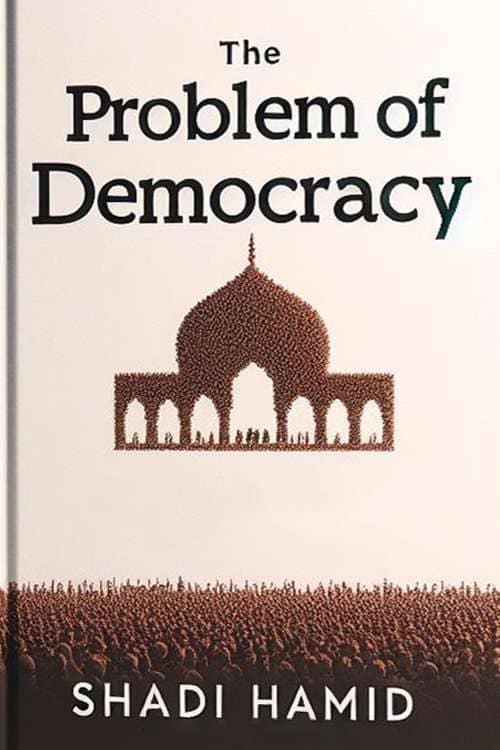


The Problem of Democracy
/
Shadi Hamid
About this Author
Shadi Hamid serves as a senior fellow at the Brookings Institution and holds a research professorship in Islamic studies at Fuller Seminary. Additionally, he contributes to The Atlantic as a writer. His debut book, "Temptations of Power," reflects his expertise in the field.
2022
Politics & Social Sciences
Politics & Government
10:32 Min
Conclusion
5 Key Points
Conclusion
US foreign policy faces a dilemma: promoting democracy often leads to support for undesirable leaders, particularly Islamists in the Middle East. This contradiction highlights the challenge of aligning democratic ideals with geopolitical interests and regional complexities.
Abstract
In the book "The Problem of Democracy," Shadi Hamid talks about a tricky situation in U.S. foreign policy, especially in the Middle East. The U.S. likes the idea of other countries having democracy, but sometimes they don't like who the people choose. The book looks at examples like the Arab Spring, where people in the Middle East voted for leaders that the U.S. didn't agree. It shows how democracy in the Middle East is different because it involves deep-rooted beliefs, like religion, which can make things complicated. The author suggests that the U.S. needs to understand these challenges to promote democracy effectively in the region.
Key Points
Summary
US foreign policy faces a "democracy dilemma."
The US usually wants every country to be like it “ a democracy. But here's the issue: sometimes, when people in a country vote, the US doesn't like who they choose. So, instead of letting them decide, the US supports leaders who aren't elected by the people. In the 1970s, when Chile voted for a socialist leader, Salvador Allende, the US Secretary of State, Henry Kissinger, said, "I don't see why we have to stand by and watch a country go Communist because of the irresponsibility of its own people."
Many years later, there's a new problem for the United States, but it's still the same issue. America wanted democracy in Muslim countries, thinking people would choose leaders who weren't extreme. But that's not what's happening. In the Middle East, where democracies are growing, people often vote for leaders that Americans see as not making good choices. They go for Islamist candidates, and the elected leaders follow policies that clash with American values.
Democracy has contradictions
Democracy is different from autocracy. In a democracy, the goal is to follow what the people want, not just one leader's ideas. A big thing about democracy is that power changes hands regularly, especially when people strongly disagree. Even though democracy aims for long-term stability, things can change quickly in the short term.
In a democracy, if a group loses an election, their plans might get changed. But if the losing side gives up power without a fight, they can still hope to win in the next election.
Democracy doesn't always mean everyone agrees. In a united place, folks would have to give up their strong beliefs for the greater good. But democracies don't erase those beliefs, and people might feel forced to hide them. It's hard to expect everyone to keep their true feelings hidden forever, making unity a tough goal.
Arab Spring showed that democracy doesn't ensure moderation
In the US, when people talk about democracy, they usually discuss things like taxes and healthcare “ not big, life-or-death issues. But in the Muslim world, it's a whole different story. The Arab Spring in 2010 introduced democracy in a place dealing with serious challenges. It's easier to have democracy in a rich and powerful country like the US, but in a poor and struggling nation, like some in the Middle East, it gets complicated. Their democratic debates aren't just about policies; they're about the very basics of how their society should work.
In Egypt and Tunisia, one person had a lot of power, and it made the countries have societies without a strong connection to religion. In Tunisia, a group called the Islamists disappeared from politics in the 1990s and early 2000s but came back during the Arab Spring. When people could vote, they chose the Islamists who had been kept down for a long time. Some in the West hoped that the new push for democracy would make the Middle East have its own religion but a political system like the West. However, the Arab Spring showed that the time in the 1950s and 1960s when Arab countries were more focused on being secular was rare.
The Middle East's history has leaned towards the rise of Islamist majorities in democratic nations. Unlike the West, religion is deeply ingrained in Middle Eastern countries. Even in Tunisia, considered relatively secular, a 2020 Pew survey found that nearly everyone prays and believes in God. Only 1% said God didn't play a central role in their lives.
Democracy needs Islamist involvement in the Middle East
People in the West with the Middle East would choose democracy and not go for Islamist rules or at least agree to keep religion separate from government. But it's not likely. If a democracy follows what most people want, and they mostly support Islamist policies, then a democratic Middle East will include a big role for Islamists.
Barack Obama was the US president when Egypt had elections after the Arab Spring. He was okay with the idea of Islamists gaining power in the Middle East and was the friendliest US leader towards them. In 2012, when the Muslim Brotherhood won the election by a small margin, the White House not only agreed with the result but also told Egypt to recognize it. Obama's team was big on supporting Egypt's democratic process during this period.
Obama had a problem when he wanted to support democracy but didn't like what happened. Mohamed Morsi's government was more democratic than others going from one type of rule to another. However, Morsi was not good at leading and got kicked out in a coup. After that, Obama tried to influence the next election. He wanted a vote for the president before one for parliament. He thought this would help democracy and stop Islamists from winning.
The West and the Middle East face unique challenges
America doesn't support democracy in the Middle East because it gets tricky when Islamists, who are seen as bad, end up winning a fair election. After the Arab Spring, people in the Middle East made it clear they didn't want America interfering.
Now, for Islam followers, it's tough too. Islam says it's the only true faith, and God will punish those who don't follow it. Some Islamists thought God was unhappy with the Middle East turning secular when Israel won the Six-Day War. But as the power of the Islamic world went down, Muslims faced a hard question: If Islam is true, why do the West and Israel keep controlling Muslim countries? So, Islamists see the US as a tool of their oppression and reject any US involvement in the region.
Improve US impact in the Middle East needs more than just opposing dictators
America doesn't support democracy in the Middle East because it gets tricky when Islamists, who are seen as bad, end up winning a fair election. After the Arab Spring, people in the Middle East made it clear they didn't want America interfering.
Now, for Islam followers, it's tough too. Islam says it's the only true faith, and God will punish those who don't follow it. Some Islamists thought God was unhappy with the Middle East turning secular when Israel won the Six-Day War. But as the power of the Islamic world went down, Muslims faced a hard question: If Islam is true, why do the West and Israel keep controlling Muslim countries? So, Islamists see the US as a tool of their oppression and reject any US involvement in the region.
The Arab Spring movement marked a rejection of autocrats supported by the United States. Since then, the U.S. has distanced itself from former autocratic allies, reducing its involvement in the Middle East. However, this poses a risk “ it could create a power vacuum filled by Moscow or Beijing, bringing undemocratic influence. Without actively promoting democracy in the region, an anti-despotism strategy only helps the U.S. "save face."
Islam and modern governance don't match
Islam's principles were established in a time without nation-states or citizenship. The concept of states having significant power didn't exist then. While Islamic law evolved over centuries, its premodern structure doesn't align well with modern nation-states. This might explain why Islamists are often vague about their post-election policies.
Take the Muslim Brotherhood, for example. Instead of advocating for a quick top-down revolution, they focus on a gradual, bottom-up approach. Their strategy involves individuals becoming more devout, getting married, and having children. Eventually, these families would demand political leaders who align with their faith. This gradualism is Islamists adapting to the realities of modern nation-states.
Muslim voters chose socialism over Islamism during a brief secular phase
Back in the 1960s, Islamists didn't like democracy because most folks in Muslim countries were voting for socialists, not them. But in the 1970s and 1980s, as people got more into Islam again, Islamists saw a chance to win elections by focusing on religious ideas. In the 1960s, they barely got any seats in parliament, but by the 2000s, they were pretty sure they could win most of the votes.
Recep Tayyip Erdogan went from being the mayor of Istanbul to a powerful figure, showcasing a change from secularism to Islamism in the Muslim world. At first, he hid his Islamic beliefs, even getting imprisoned for reciting a religious poem. Later, when he gained more influence, Erdogan subtly shifted Turkey towards Islamism. He didn't force people to be super religious but used gentler methods. For instance, he made alcohol more expensive, limited when it could be sold, and banned it near certain places. He also gave money to young couples who got married.
America says one thing, does another
The United States is often accused of being hypocritical, and it's true. Hypocrisy means saying one thing and doing another. American leaders talk a lot about morality and justice, but their actions don't always match up. On the other hand, China and Russia, being autocracies, don't get accused of hypocrisy much. They are straightforward about their self-interest, so when they support dictators abroad, it aligns with what they say and do.
The United States appeared less hypocritical on the global stage during Donald Trump's presidency. Trump didn't advocate for American values worldwide or condemn dictators. However, this newfound straightforwardness might not be positive. It's generally better when the American president supports the fight for global justice, even if only in words. Accusations of hypocrisy against the U.S. hold, but expecting unwavering consistency in promoting democracy abroad is unrealistic. America naturally treats allies and adversaries differently, and it's unavoidable for the powerful nation to align with regimes that don't meet its proclaimed democratic standards.
Share:
Latest Books
Related Books





_(1).png)
Take a moment to rate and review our app. Your insights help us to improve.