The Value Mindset
Mike Hutchinson and Erik Stern
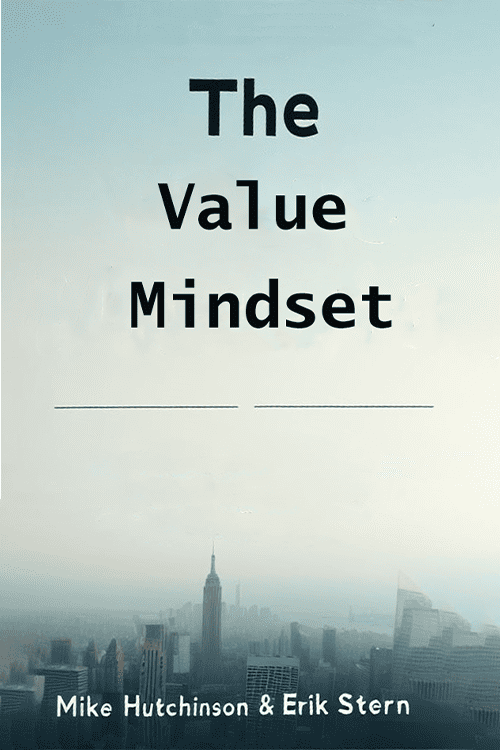


The Value Mindset
/
Mike Hutchinson and Erik Stern
About this Author
Erik Stern serves as the managing director of European Operations and Senior Vice President at Stern Stewart & Co. He is also known for co-authoring "The Capitalist Manifesto." Mike Hutchinson, a seasoned professional writer, previously held the position of vice president at Stern Stewart & Co. Both authors have contributed to several international publications and have made appearances on various television programs.
2004
Business & Money
Finance
10:28 Min
Conclusion
7 Key Points
Conclusion
In business, creating real value means more than just looking good on paper. It's about smart management, long-term thinking, and fair rewards. By focusing on what truly matters, companies and governments can grow sustainably and make a positive impact.
Abstract
Value creation stands paramount, epitomized by industry titans like Four Seasons Hotels, Inc., and The Coca-Cola Company. Their success hinges not on asset accumulation but on astute management, exemplifying efficient resource utilization. Investors navigate these complexities, seeking higher returns despite inherent risks. Efficient markets, though occasionally marred by bubbles, remain resilient, processing information swiftly. Mergers, often touted as value-enhancing, frequently falter, prompting a call for reevaluation. These insights, articulated by seasoned professionals Erik Stern and Mike Hutchinson, underscore the imperative of value-centric strategies in both corporate and governmental realms. Erik Stern made something called the Wealth Added Index (WAI) to measure value. Now, he and his co-author explain how to make value that lasts.
Key Points
Summary
Value in Business
Value is crucial in the business world. The top-notch companies like Four Seasons Hotels, Inc., and The Coca-Cola Company excel because they create immense value. It's not about what a company owns, but rather how effectively it uses its assets.
Take Four Seasons, for example. Despite owning few hotels, they shine in managing properties owned by others. Their success lies in smart management, not just accumulating wealth. Remember, capital is a means to success, not the end goal. The real winner is the company that earns the most profit with the least capital.
Roberto Goizueta, the former chairman and CEO of Coca-Cola, was known for his exceptional ability to create value for the company. Originally a chemical engineer, Goizueta took over as Coke's leader in 1981 when the company's market value was $4.3 billion. By the time of his death in 1997 from lung cancer, Coke's market value had skyrocketed to $180 billion. This remarkable growth was a result of Goizueta's unwavering focus on creating value, which involved minimizing expenses and maximizing profits.
Fake Value in Businesses
Companies often create what seems like value but is actually deceptive. This deceptive value, known as sham value, occurs when the increase in earnings or cash flow costs more capital than it generates. Let's take the example of a supermarket deciding to bake fresh bread in-store. The supermarket invests in ovens and other equipment, assigns employees to bake and stock the bread, and soon sees customers lining up at the bread counter. The increased unit sales make the supermarket manager appear successful. These sales translate into revenues on the income statement and contribute to the bottom line as earnings. As long as the bread earns more than its overhead costs, the bread business looks like it's creating value. However, this can be misleading.
In evaluating decisions, one crucial factor often overlooked is the cost of capital. While the income statement accounts for depreciation, this accounting measure may not align with economic realities. Understanding this requires a closer look at the stock market's nature.
Why People Invest in Securities and Bonds
People buy securities to make money. They choose one over another because they want to make more money. When you buy a stock or a bond, you're taking a financial risk. You could use your money for lots of things, but investing gives you a chance to grow it.
For instance, some people invest in government bonds because they seem safe. But hold on, nothing's totally œrisk-free. Even though most governments in developed countries usually pay back what they owe, there's still a small chance things could go wrong. When you buy bonds, you're basically saying, "Here's my money, give it back with interest." But if the government isn't good at handling money, they might pay you back with money that's not worth as much as when you lent it to them.
Why Investors Choose Risky Corporate Investments
When people invest, they often look for ways to make their money grow. One option is to buy bonds from trustworthy governments, which offer a steady, low-risk return. But why would anyone take a chance on corporate stocks or bonds, which can be risky? Companies sometimes fail, stocks can drop, and bonds may not get paid back.
The simple reason is this: the potential for higher returns. Despite the risks, corporate investments can yield more profit over time than safe government bonds. So, investors are willing to take on those risks in exchange for the chance to earn more money. It's all about aiming for bigger rewards, even if it means facing some uncertainty along the way.
Efficient Markets
In the world of finance, companies can raise money either by borrowing or by selling stocks. even though both methods achieve the same goal of getting funds, they are treated very differently in accounting.
When companies borrow money, it's listed on their balance sheet as a liability, and the interest they pay is recorded as an expense on their income statement. However, when they sell stocks, there's no mention of debt on the balance sheet, and no extra expenses show up on the income statement. It might seem like getting money through stocks is a free ride, but appearances can be deceiving.
Investors who buy stocks expect to make a profit. And in the world of finance, markets are efficient. That means stock prices usually reflect what investors collectively think about the risks and returns of each stock.
Imagine the market as a giant information processor. It includes investors, analysts, company executives, and many others. When something important happens, like news of a bad harvest affecting grain prices, the market quickly adjusts. This efficiency means that information is processed fast, and the market adapts to changes almost instantly.
The Dot-Com Bubble
Even during the wild dot-com frenzy of the 1990s, where stock prices skyrocketed to absurd levels, the market remained surprisingly rational. Looking back, sure, some of those prices seemed insane. But at the time, the market was doing its best to price stocks accurately based on the information available. Admittedly, some analysts and big players intentionally misled others, adding to the chaos.
Yet, despite the frenzy, the overall efficiency of the market wasn't tarnished. Yes, there was a bubble, but that doesn't mean the market suddenly became irrational. It just shows that sometimes, the information the market relies on can be faulty. Even so, the market's core function of balancing supply and demand remained intact.
Mergers and Acquisitions Often Backfire
When companies merge or acquire each other, they're playing a risky game with shareholders' money. Surprisingly, despite the stakes, many managers don't seem to care about the costs involved. But the truth is, that mergers and acquisitions often end up destroying more value than they create.
One company decides it wants to buy another because it sees something appealing about it. Maybe the target company operates in a market the buyer wants to break into, or maybe it has a product line that seems like a good fit. Sometimes, it's just a case of thinking that bigger is always better in the business world.
The stock market is like a giant brain, constantly processing information. When two companies decide to merge, both of their stock prices reflect what the market thinks they're worth based on their future earnings. Yet, in a merger, the buying company offers to pay more than what the market thinks the target company is worth. They call this extra payment a "synergy" bonus, but it's really just a premium.
Rethinking Mergers
When companies buy other companies, they often pay more than what the bought company is really worth to anyone else. They do this because they hope to make extra money from owning that company. They call this "synergy," which means they think they can make more money by putting the two companies together. This whole synergy thing doesn't always work out as planned.
Usually, when a company announces that it's buying another company, its own stock price drops while the bought company's stock price goes up. This tells us something important: the market sees these deals as the first company basically giving away money to the second company's shareholders. So, despite all the talk of "synergy," what's really happening is that the buying company is losing value to make the deal happen.
Companies should merge without paying extra. Instead, they should only merge when it's clear that both sets of shareholders can make money at the current price. Overpaying for mergers just doesn't make good business sense.
Compensation Aligned with Value Creation
Many corporate managers make poor decisions because their compensation programs are flawed. These programs often reward CEOs and others for the wrong actions, focusing solely on short-term stock price boosts rather than sustained value creation.
Creating value isn't just about quick fixes; it's about long-term efforts. By assessing the economic value generated by a management team, we can fairly evaluate their performance and determine appropriate rewards.
If we prioritize value creation, we can prevent various management wrongdoings, like manipulating accounting or forming large, value-sapping conglomerates. Managers who prioritize value are less likely to make impulsive decisions like entering new markets or launching products without solid economic reasons.
Value-focused managers aim to minimize capital tied up in the business. They understand the value of capital and work to reduce unnecessary expenses, often through outsourcing. Instead of unnecessarily investing in assets, they focus on excelling in their core functions. For instance, companies like Four Seasons prioritize excellence in hospitality without buying up properties.
Government Efficiency
Just like companies, governments should focus on what they do best. Some governments have stepped into areas like postal services and infrastructure, which the private sector could handle more efficiently. Instead, governments should create an environment where markets can thrive. This means letting businesses compete and invest where they can create the most value. By doing so, governments can ensure better use of resources and boost overall efficiency.
Share:
Latest Books
Related Books
.png)


.jpg)

Take a moment to rate and review our app. Your insights help us to improve.